 >
Can Nassau County stop mega data centers? Legal warning dominates public workshop

YULEE — Nassau County commissioners face significant legal risks if they attempt to ban data centers outright, County Attorney Denise May warned Monday, explaining why county officials are pursuing strict development regulations instead of the prohibition demanded by some residents.
"Why can't we just ban them?" asked County Commissioner John Martin during the County Commission's first public workshop on proposed data center regulations.
"My opinion is an outright ban is more than just risky," May told commissioners.
Although Florida law allows local governments to regulate data center development through zoning and land development standards, May said those restrictions must have a defensible legal basis. The county's current approach is to establish measurable, enforceable requirements rather than risk adopting a blanket prohibition that could be overturned in court.
Martin suggested that an outright ban could have the unintended consequence of attracting developers willing to exploit weaknesses in the county's legal position.
"And if we didn't do our due diligence like this, we would be inviting the bad actors to come to Nassau County and potentially walk right over us," he said.
The concern was that a poorly supported ban could be challenged by developers, particularly because data centers may already qualify as permitted uses under existing county regulations. By establishing detailed standards governing setbacks, noise, water consumption and other impacts, county officials hope to retain greater control over where and how data centers operate.
The workshop was the first of two scheduled reviews of a 66-page fact-finding report and accompanying draft regulations developed following the county's June moratorium on data center development.

"Our initial hypothesis was that the problem children, if you will, were just based on old technology and not having new technology and using best practices," Pope said. "And ultimately what we found out is that's not accurate."
The challenge, Pope told commissioners, is to establish regulations that prevent those problems while recognizing that data centers vary enormously in size, purpose and environmental impact.
She urged commissioners to use more of the 12-month moratorium adopted in June to study potential impacts and hold evening meetings so working residents could participate.
She objected to a proposed 100-foot setback for smaller data centers, which she said could include buildings as large as 10,000 square feet.

She urged setbacks of 300 to 500 feet or more, citing concerns about noise, sleep disturbances and possible health effects.
Chad Charland of Fernandina Beach praised several provisions in the draft regulations, including restrictions on nondisclosure agreements, the proposed elimination of county economic development incentives, wildlife protections, lighting standards and decommissioning requirements.
Charland questioned why the county would require closed-loop cooling systems without also requiring data centers to operate entirely on renewable energy.
Charland also criticized a proposed $1,000 daily fine for certain reporting violations, arguing that such penalties would be insignificant to companies investing billions of dollars.
He suggested increasing the fine to $5,000 a day or establishing escalating penalties.
He suggested requiring substantially greater local participation.
She thanked the committee for incorporating many of the suggestions but said the draft appeared to lack sufficient protections for groundwater and private wells.
She also questioned whether the proposed regulations adequately addressed wastewater discharge from data center cooling systems.
Peggy Walsh of Yulee challenged commissioners to explain the economic justification for allowing large data centers.
"Convince me, convince all of us what is so wonderful about having a data center in our backyard," Walsh said.
Commissioner Martin said he favored stronger setbacks but wanted regulations that could withstand legal challenges.
May said the county's approach was intended to establish defensible standards that could be enforced against developers and operators.
For example, Nassau County generally cannot dictate which energy source a utility must use. However, the county can establish land-use and performance standards governing noise, setbacks and other impacts within its jurisdiction.
Pope provided commissioners with an explanation of why Nassau County has attracted interest from data center developers.
The county's long-range growth plan identifies approximately 22,000 acres of potential employment centers, Pope said.
A major natural gas pipeline also traverses the western part of the county.
"So why are so many people interested? Why is there such a discussion in Nassau County?" Pope asked.
He said those infrastructure corridors overlap portions of the county with relatively sparse populations, making them attractive for large industrial projects.
Pope emphasized that smaller data centers serve different purposes. Some are incorporated into hospitals, manufacturing plants and other businesses, while smaller independent facilities may need to be located near population centers to minimize data transmission delays.
County Operations Manager Amy Bell outlined the committee's research, which included five in-person data center visits and five additional case studies.
Bell described the project as a 1.2-gigawatt development encompassing approximately 900 acres, with construction expected to last about six years.
The project provided lessons about the importance of planning for construction traffic, parking, noise and public infrastructure.
Those demands created significant challenges for the surrounding community.
He said the experience demonstrated why construction impacts must be considered separately from long-term operations.
Bell said the committee would examine those case studies in greater detail at the next workshop.
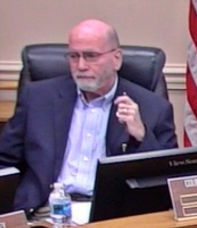
Martin expressed support for increasing setbacks and questioned whether renewable energy requirements could be imposed.
A small data center located in an existing commercial building, he explained, would present substantially different impacts from a hyperscale campus covering hundreds of acres.
Martin also questioned whether the proposed fines were sufficient to compel compliance.
She cautioned that penalties must comply with constitutional restrictions on excessive fines.
"Our responsibility is to develop responsible controls and ordinances to protect Nassau County's communities and citizens," Gray said.
"Where's the benefit? And I think that we need to show that," he said.
Conservation and Natural Resources Manager Taylor Clem, a member of the fact-finding committee, said the report was developed by comparing residents' concerns with expert testimony, published research and visits to existing facilities.
The county has retained an acoustical engineering expert to help refine its proposed noise standards.
Staff also plans to incorporate more specific dark-sky lighting requirements intended to reduce glare and light pollution.
The committee's recommendations remain advisory. Commissioners have not adopted the proposed zoning changes or operating standards.
The second County Commission workshop is scheduled for Nov. 9 and will focus more closely on the case studies and proposed regulations.
County officials expect to publish a final version of the report and draft regulations Nov. 25.
The January hearing is scheduled as the adoption hearing, although commissioners have not committed to approving the recommendations.
Residents can continue submitting comments through the county's online data center portal and at upcoming public meetings.


Comments
No comments on this item Please log in to comment by clicking here