 >
>
Pat’s Wildways: Mayan Home
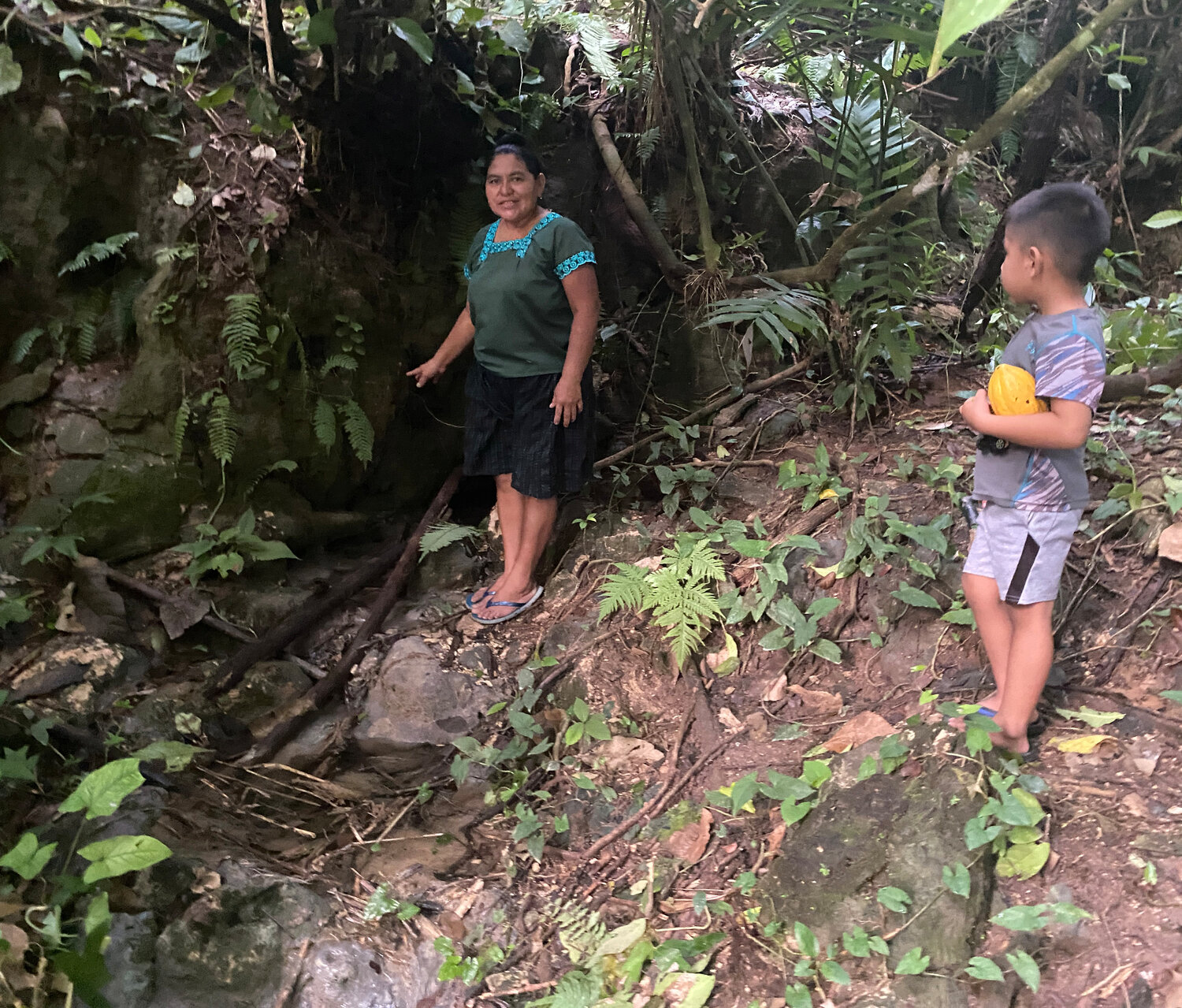


Bucko and I visit Placencia, Belize a few times a year for a couple of weeks at a time. We stay at the same five-room beachside hotel, in the same room, with the same neighbors. Over the years, I have gotten to know the various Creole (aka Kriol) Westbys near us and gradually I am also beginning to know the Mayan basket sellers that roam the beach selling their wares. These hard-working folks take a three-hour bus ride down to the village from their homes up in the Maya Mountains and often pass by Bucko and me when we are at our next-door tiki bar. Often, we invite them to join us for a Coca-Cola, and we chat with them. In the months since, Juanita and I have become WhatsApp friends and we have traded photos and texts about our very different lives. It wasn’t much of a stretch this time when I asked Juanita if I could ride the bus with her and spend a night in her home, and she happily obliged.
So, one day Juanita met me at my hotel after roaming the beach selling her crafts and together we boarded the local bus for the long ride up to the mountains. She lives in a home on land her father, the local bush doctor (i.e. traditional healer) cultivated as a cacao plantation but maintained in a mostly jungled land with native herbs and trees. Upon arriving at her home, I was greeted by Reiny, her daughter, who also sells crafts in the village and her 4-year-old grandson, Shawn. After the bus ride the first thing on the agenda was dinner that Juanita prepared in her dirt-floored kitchen area — tortillas made from scratch, scrambled eggs from her chickens, and wild greens used to make calaloo, a dish resembling tasty spinach.
And then it was time for the jungle tour. Juanita’s property is far from groomed, and she wielded her machete to get us through the bush and to dig up roots of various plants for me to taste. I’m not as spry or balanced as I used to be, and I deeply regretted not carrying my walking stick as we stepped over cut plants, rocks, and mud puddles on the hilly ground. Juanita and Reiny pointed out the edible and useful plants surrounding us. Calabashes growing on trees become bowls; various plant roots are edible, the jippi jappa fronds are woven into baskets, and all manner of other interesting plants that I couldn’t keep track of are used as well. She especially wanted to show me where the gibnuts live, on a far corner of her property adjacent to the Nim Li Punit Mayan ruins and protected area. Gibnuts, known to most of us as pacas, are large rodents that often feature in Belizean cuisine. But not her gibnuts! These she proudly protects from hunters on her property.
That night I slept in Juanita’s bed in the only space closed off from the community living area, while Juanita, Reiny and Shawn slept in the other bed. When Reiny’s husband returned from his own job in Placencia village, he had the hammock. “But where is the bathroom?” Juanita and Reiny led me out back and up a slippery, muddy, rocky slope to the distant outhouse. “This won’t work for me tonight. Do you have a bucket?” And yes, they did. Perfect solution.
The next morning, I saw that Juanita had been busy before I woke up. Cacao beans were roasting on the wood-burning stove in a separate building, and corn had been cooked and ready to be taken to the local corn mill to be ground into dough for that day’s tortillas. Reiny came back on her bike from their village with the corn dough, and a live rooster, which soon enough I watched being killed, de-feathered, washed, quickly roasted, cut into pieces and thrown into the cooking pot, already bubbling with herbs and water. Cocho (chayote), young pumpkin, and various other vegetables from their property were added as well, turning the result into a long-simmering Mayan dish called caldo.
This scrawny rooster was the only “meat” they would eat in a week, and this time they made it especially for me. And for their neighbors and relatives. A portion of the soup was doled onto my plate, and carefully divided into a half dozen containers that they were providing for her relatives who live nearby. One tough scrawny chicken split eight ways. Enough for all.
Juanita came back to Placencia a few days later, and I took her to lunch and sent her off up the mountain with a bucket of fried chicken and other food items that I’m sure will also be split eight ways or more. We planned my return visit next time, where I will bus to her home and this time explore the Mayan ruins behind her house and the conservative Mennonite community of Big Pine located nearby. But it will only be for the afternoon this time, in June, too hot and buggy for me to spend in a non-air-conditioned native home.
It is wonderful to have Juanita and Reiny as my new friends. We all look forward to learning more about one another and bridging more cultural lines. I sure do love Belize! Can you see why?
Pat Foster-Turley, Ph.D., is a zoologist on Amelia Island. She welcomes your nature questions and observations. Patandbucko@yahoo.com


Comments
1 comment on this item Please log in to comment by clicking here
Bangelo
Pat, I continue to stand in awe and thankfulness of your stories. Hugs, Beth
Sunday, January 11 Report this