 >
>
Looking for fairness in an unfair world: an opinion on paid beach parking
 Submitted by Suanne Z. Thamm
Reporter - News Analyst
July 19, 2018 5:00 p.m.

FLASH! A little known piece from Jefferson’s first draft of the Declaration of Independence:
"We hold these truths to be self evident, that all men are created equal, that they are endowed by their Creator with certain unalienable rights, that among these are life, liberty and the pursuit of free beach parking."
Now that I’ve got your attention, let me explore the nature and controversy of beach parking: who is currently paying, who should pay and why we’ll never agree.
 One thing about which we can all agree I hope is this: Florida’s dry sand beaches are public beaches, open all to enjoy – HB 631 not withstanding. But nowhere in the Florida state constitution or in local law is the same absolute guarantee provided for beach accesses, restrooms, boardwalks, picnic tables, piers or any other human contrivance, including parking spaces and lots. “Someone” must pay to create and maintain all the related enhancements and facilities that help everyone enjoy the beach. And even more importantly, “someone” must pay for insuring the safety of humans and animals that swim in our waters, sunbathe, or nest annually on our sandy strands.
Another point on which I hope we can all agree is this: the number of beach visitors increases in direct proportion to the increases in city and county populations as well as in tourism numbers.
 Fort Lauderdale's paid parking
The Sand Tax
Those of us who are lucky enough to own property in the city of Fernandina Beach or the unincorporated portions of Amelia Island recently began paying something commonly called “the Sand Tax.” Implemented in late 2015, the purpose of this tax is to pay the ten percent of costs required to renourish ocean beaches periodically, with the remaining 90 percent cost being borne by federal and state government. The money collected annually for this effort is put in a lock box to be used only for beach renourishment—not repairing dune walkovers, paying lifeguards or providing parking. The only people who pay into this fund are city and non-city Amelia Island property owners (excluding properties already covered by the South Amelia Island Shore Stabilization Area, or SAISSA). The last millage rate assessed for this purpose was 0.1021. So if your property was assessed at $150,000, in 2017, you paid $15.32 into this fund. If you were a renter, someone who lived on the Nassau County mainland, or one of the island’s many visitors from around the region and the world, you paid nothing.
This tax does NOT cover beach parking, lifeguarding or clean up.
 Cocoa Beach paid parking
TDC and Leave No Trace program
We are fortunate that the Nassau County Tourist Development Council (TDC) understands the value of our beaches. They have been willing to help out in recent years before the Sand Tax kicked in to pay all or part of the local cost share for beach renourishment. But their commitment extends beyond this into beach clean up and maintenance (Leave No Trace program). According to TDC Executive Director Gil Langley, “Last year we budgeted $465,200 and spent $1,459,884 with $1 million coming from reserves. Our strategic plan calls for us to budget 10% of net bed tax revenues each fiscal year, which we do. Unspent beach revenue flows to reserve funds and cannot be allocated to other purposes. The budget for FY2018 is $544,897.”
They might argue that the people who pay the bed tax by staying in one of the local accommodations have already paid to park.
 Pompano Beach paid parking
Nassau County contribution
Per agreement with Nassau County, the city’s lifeguard services extend to county beaches on the island as well. The county assists in this effort by providing an annual payment. The payment for FY2018-19 has been budgeted at $118,650—an increase of $50 over the current fiscal year.
What’s fair and who defines?
We can’t discuss the issue of providing parking for the ever increasing number of beachgoers without discussing the issue of fairness as it applies to who should pay for this convenience. And that, indeed is a thorny issue.
As I said earlier in this piece, there is no question that people should be able to enjoy city beaches without charge. But is it fair for:
- Some people to park their cars all day at a beach access just because they got there first?
- Restaurant goers to take up prized spaces in city owned and maintained beach parking lots when they are not using the beach?
- City property owners to pay the full freight for beach parking lots?
- Residents to “soak the tourists” to pay for parking, when the TDC already pays half a million bucks per year to clean up after them (and us)?
- Beachgoers to park in neighboring residential areas when beach parking slots are not available?
Since there are so many factors that would need to be taken into consideration in assessing parking costs fairly across the broad spectrum of folks who each claim “special circumstances,” it would seems like Mission Impossible to even attempt it. For just that reason, we are where we are today. And the only way to break this cycle of inaction is to act, knowing full well that not everyone will be happy with the decision.
While beach and street parking are public, they are not free. Their costs are comprehended in the city’s General Fund budget, which is made up primarily of ad valorem (property tax) revenues. This means that every one of the property owners pays something toward this effort, just as they pay something toward maintaining city parks and other city facilities and services. Property owners subsidize city facilities and services, whether they use them or not.
 The question of fairness comes into play when we ask: to what extent should property owners be required to foot the bill? Personally, I believe that being part of a community means that we taxpayers should not object to paying for basic services and facilities that help us all brag about our city and its “hometown feel.” I have no issue with part of my taxes being used to support the city activities and facilities that contribute toward that end, whether or not I choose to take advantage of them.
But just because I am willing to contribute does not mean that I am also willing to subsidize those who make great use of these facilities. So I think it is fair for people who use city parks or facilities for private events to pay for that use, whether they pay taxes in the city or not. I can’t imagine that anyone would take issue with taxpayers also being required to pay for a plot if they choose to be buried in Bosque Bello Cemetery.
This brings me back to fairness as it relates to the issue of paid parking. Is it fair for Fernandina Beach taxpayers to cover the bulk of the costs associated with city beaches? Not all local beachgoers pay ad valorem taxes; not all local residents are beachgoers. Some beachgoers walk or ride bikes to the beach; others drive to the beach and park all day in one of the lots. Visitors who stay overnight in one of the island’s hotels, B&Bs or rental properties can argue that they pay to use beach parking through the bed tax that the TDC collects. Those who drive to the beach but live off the island and who do not stay overnight on the island pay nothing.
Any system that would try to sort out all the permutations of fairness for the folks mentioned above would cost far more in administration and enforcement than it would ever recover.
So what is the answer for equitable cost sharing for beach parking? Or more importantly, is there an answer? There is a saying that if there is no solution, there is no problem. Maybe that’s where we are.
Or we just all need to acknowledge that any vehicle parked on or at the beach needs to pay a user fee. A small sacrifice to live – and park -- in paradise.
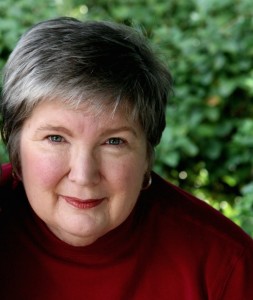 Editor's Note: Suanne Z. Thamm is a native of Chautauqua County, NY, who moved to Fernandina Beach from Alexandria,VA, in 1994. As a long time city resident and city watcher, she provides interesting insight into the many issues that impact our city. We are grateful for Suanne's many contributions to the Fernandina Observer.


Comments
No comments on this item Please log in to comment by clicking here