 >
>
City board: County mobility fee hikes would devastate city development/improvements

Fernandina Beach’s Planning Advisory Board warned this week that Nassau County’s proposed overhaul of its mobility and impact fee system — one of the most aggressive fee increases the county has considered — could stall redevelopment in the city, discourage new businesses and residential construction, and impose what several board members described as double taxation on city residents.
The discussion comes as Nassau County commissioners consider adopting sharply higher mobility and impact fees under an “extraordinary circumstances” provision of state law. That designation allows counties to raise fees beyond the standard 50 percent cap if they can demonstrate exceptional growth pressures or infrastructure needs.
“For example, a fast-food restaurant of a little over 4,000 square feet would pay $474,000 in mobility fees,” PAB member Nick Gillette said at the meeting. “Do you think they’re going to locate here? No, they’re not.”
County documents show mobility fees for some land uses would more than double or triple, with single-family residential mobility fees increasing from roughly $4,000 per unit to more than $11,000. Fees for restaurants, hotels, medical offices, and retail development would rise substantially based on updated trip-generation and vehicle-miles-traveled calculations.
County staff have said the increases are needed to fund transportation capacity improvements as growth accelerates, particularly east of Interstate 95, and to address rising construction costs. If approved, the new fees would take effect in March 2026 after state review.
But during the Planning Advisory Board meeting Wednesday, members repeatedly questioned both the scale of the increases and how much benefit Fernandina Beach would receive.
Gillette told the board he has been closely following the county’s proposal and said the city would be affected far more severely than in the past.
“If you can demonstrate extraordinary circumstances, you can raise them more,” Gillette said. “The county is claiming that — and they’re raising the fees sometimes 100 percent, sometimes tripling it.”
Gillette said the proposed changes threaten redevelopment efforts the city has spent years trying to encourage.
“I think part of that may undermine some of our redevelopment efforts that we’re looking at,” he said.
He noted that under the proposed schedule, the single-family residential mobility fee would increase from about $4,000 to $11,332 per unit, while commercial projects would face dramatically higher charges.
Gillette also cited medical offices, which he said would be charged roughly $41,000 in mobility fees per 1,000 square feet, and hotels, pointing to a recently built 239-room beachfront hotel that would pay about $1.7 million under the new fee structure.
“That’s about $7,800 a unit,” he said. “That’s a big number.”
Beyond mobility fees, board members focused on Nassau County’s proposed increases to regional impact fees for parks, recreation, and administration.
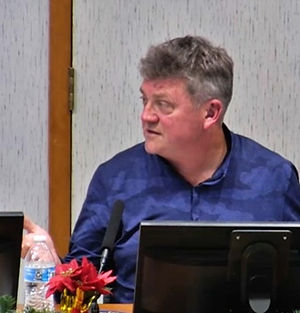
“So we’re going to wind up paying $7,500 to the city and then another $5,000 to the county,” he said. “They’re never going to use the county facilities. We have great recreation facilities. To me, this is double taxation at its finest.”
Board members noted that the city provides significantly more parks and recreation services than the county, yet city residents would be paying county fees without a reciprocal benefit.
“So, what are we paying for if we’re going to get charged and dinged all that?” he asked.
“They’re going to take the money from the island to pay for that,” Gillette said.
“We voted to annex in about an additional 18 acres,” Stevenson said. “That development would get zipped with these higher fees.”
“If the county’s going to take all the money and we don’t get any of it, again, why would anyone want to develop a higher-density development on Sadler or any of the areas that we designate?” Bennett said.
Robas also raised concerns about affordability.
City Project Manager Glenn Akramoff told the board that city staff have been in discussions with Nassau County for months and confirmed that new interlocal agreements would be required for the fees to apply within city limits.
“They’re booming,” he said. “They’re going to have a boom on the other side of the bridge. And they need to do these things.”
“The key thing here is that it’s all based on how many trips you create,” Akramoff said. “So they created that chart based on how many trips you create from and to your site per day.”
“I think that’s where you get into some of the debate on the technical side,” he said.
“I think we need to reconsider the interlocal agreement with the county,” he said.
“The city has been aware of it,” Prince said. “We’ve discussed that an interlocal agreement would be required.”
“I just want everyone to know what’s coming,” he said.
---------------------------------------------------------------------------------------
If you value community-centered journalism, please consider making a tax-deductible donation to support our work at the Observer. Your contribution, no matter the size, helps us continue telling the stories that matter most to our community. Thank you.


Comments
3 comments on this item Please log in to comment by clicking here
Mark Tomes
Lol, the county approves every development that comes its way, and then declares it an emergency so they can (belatedly) pay a little bit more for infrastructure for that same development. IMHO, the impact fee increases will not stop development, as they are not overall that high in the first place, and secondly, the profits from developing in Nassau County are still very high. These new impact fees (if implemented) still do not come close to what the taxpayers eventually will pay for all that development, not just in infrastructure, but in traffic, pollution (air, water, light, noise), loss of trees/wildlands/wildlife, and general quality of life. And frankly, if it did stop or slow down the development, then GREAT! About time. And no, FB city residents will not pay double (read the article in the N-L today). As always, we should focus on truly affordable housing and inexpensive/ubiquitous public transportation. And elect commissioners that are conservation-minded and socially responsible!
Friday, December 12, 2025 Report this
JofusD
I did a bit of research and verified that Mobility fees almost never affect existing structures. Good.
So if these higher fees will help halt new construction on the island then I'm all for it.
As a 25-year resident and homeowner I cannot imagine that Amelia Island needs more of anything.
Also read the previous article saying that income from tourism is down. Again...Good. Maybe the city should not have overbuilt with its ugly developments and hotels impossibly squeezed between trees.
Friday, December 12, 2025 Report this
Douglas69
All the more reason to acknowledge the high cost of free parking in downtown and STOP the insidious give away to those who are not city taxpayers.
Friday, December 12, 2025 Report this