 >
>
Beach park upgrades could cost Fernandina $500K+ a year
Why should city taxpayers be left holding the bill

COMMENTARY
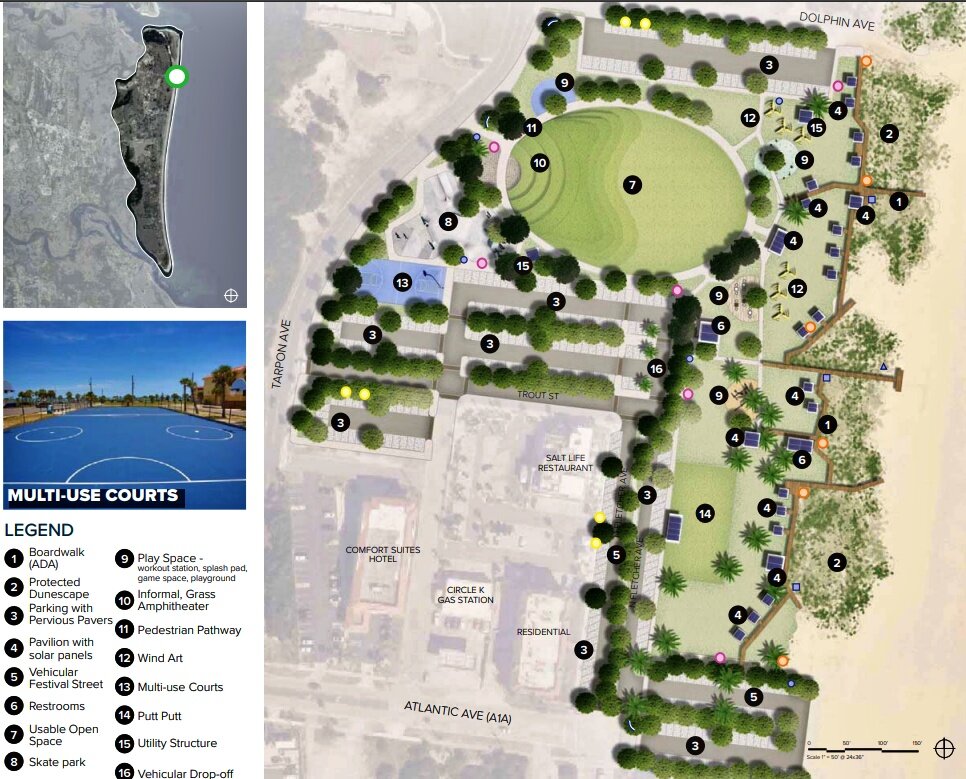
FERNANDINA BEACH - There is no denying that what’s being proposed at Seaside Park would be a major step forward for Fernandina Beach.
The design is thoughtful and polished — shaded gathering areas, improved beach access, upgraded parking, and landscaping that reflects a true destination community. It’s the kind of space residents will enjoy and visitors will expect.
But Seaside Park is not just a park.
It is the beginning of a system.
What’s being discussed there is part of Nassau County’s broader beach harmonization plan, a long-term effort to transform multiple beach parks into a unified network with consistent amenities, upgraded infrastructure, and a cohesive look and feel. Seaside is now the model and Main Beach and North Beach Park are next.
And that’s where the financial reality comes into focus.
Because while the county is driving the vision, the cost of maintaining these four upgraded parks now falls to the city of Fernandina Beach. A park like Seaside, once built out, could reasonably cost $75,000 to $150,000 a year to maintain. Main Beach, with its larger footprint and heavier use, could exceed $200,000 annually. When those costs are extended across multiple parks envisioned in the harmonization plan, the city could be facing a recurring obligation of $300,000 to $700,000 every year.
That is not a one-time expense. It is permanent.
And it comes at a time when the city is already stretched. Fernandina Beach continues to wrestle with stormwater funding needs and broader infrastructure demands, and just this month added another major responsibility with the opening of the waterfront park on April 11. That park, like Seaside, will require ongoing maintenance that becomes part of the city’s baseline budget.
The city is so strapped for money, commissioners instituted paid parking in the historic downtown in hopes of generating $2 million yearly to pay for other improvements.
Individually, each of these beach park projects makes sense. Together, they begin to create a financial trajectory that is difficult to sustain.
But the larger issue is not just the cost — it’s who is being asked to pay it.
These beach parks are not being upgraded solely for neighborhood use. They are being designed, quite intentionally, as tourism assets. The harmonization plan emphasizes improved amenities, expanded access, and enhanced aesthetics precisely because these parks serve visitors as much as residents. They are the front door to Amelia Island’s tourism economy.
And that is where the current approach breaks down.
Nassau County already collects $11 million-plus annually through the tourist development tax— the “bed tax”— paid by visitors staying in local accommodations. The city generates about half of the money. Those funds are specifically intended to support tourism-related infrastructure and promotion.
If ever there were a clear example of tourism infrastructure, it is a system of upgraded beachfront parks designed to attract and accommodate visitors.
Yet the current Nassau County model leans heavily toward using those funds for marketing — promoting the destination — while leaving the city to absorb the cost of maintaining the very amenities that make that promotion effective.
That system no longer makes sense.
If Seaside Park is a glimpse of the future, then that future should come with a shift in priorities. It is time for the Tourist Development Council to begin allocating a meaningful portion of bed tax revenues toward maintaining the assets that tourism depends on, not just advertising them.
Because without that shift, the burden falls to city taxpayers.
And that creates a fundamental imbalance: visitors help generate the demand, but city residents are left paying the bill.
Seaside Park should move forward. It is a strong project and a clear improvement. But it should also mark a turning point in how these projects are funded.
If the island is going to invest in a network of high-quality beach parks that support tourism, then the revenue generated by that tourism should be used to sustain them.
Otherwise, what begins as a beautiful vision risks becoming a long-term financial strain — one that Fernandina Beach was never meant to carry alone.


Comments
9 comments on this item Please log in to comment by clicking here
I absolutely could not agree with you more, A long look needs to be taken at the bed tax and how it is used and who controls it. The legislature needs to change it. Funds should be used to pay for infrastructure like these parks and also beach walkovers and maintenance.
Wednesday, April 29 Report this
rmm123
Your article might offfer a partial yet significant, answer. If I remember right, the bed tax is split between the city and county based on population, not on which jurisdiction generated the tax revenue. It seems that dividing the tax based on where the money comes from would better reflect how tourism affects each area. “ Nassau County already collects $11 million-plus annually through the tourist development tax— the “bed tax”— paid by visitors staying in local accommodations. The city generates about half of the money.“
Wednesday, April 29 Report this
Bob121
That system no longer makes sense.
Wednesday, April 29 Report this
FunnyGirl4615
The imbalance is deeply concerning. And the TDC via the state does not seem ready, willing or able to let loose with some of the cash they collect from the bed tax. My fear, and that of many others in the community, is that rather than forfeit some of the bed tax to pay for the ongoing maintenance of the parks - more paid parking will be instituted. Last time I checked, our tax-paying residents have not have not had an opportunity to vote "yes" or "no" on "beach harmonization" and the costs. I wonder what they would say if given the opportunity.
Wednesday, April 29 Report this
PaulaM
Why can’t the beach be just the beach with only the ocean, the sand and the peace be the “entertainment “..the enjoyment of simply nature?
Wednesday, April 29 Report this
lehartgreen
I also agree 100%. Our fragile island does not need to have more full color ads in the NYT magazine, etc. Now with the Riverstone project looming on the south end, we need more infrastructure support than ever. Going all the way back to Ron Sapp’s attempt to get the city and county to be one entity, the city is getting the raw end of these deals. Maybe Gil Langley should give up some of his nice salary to help out.
Wednesday, April 29 Report this
Kelprod
If there is incremental expenses, then there should be incremental revenue. Increase the bed tax. And agreed, that a larger % should go to the city. This seems to be an easy fix if reasonable people are involved.
Wednesday, April 29 Report this
Karen1952
Looks like a lot of concrete and asphalt
Wednesday, April 29 Report this
Leave the beach front as is, problem solved. If people need a park like setting the Island has them everywhere. Keep the beach as natural as possible. Also, we have 40 public beach access points, the most I have ever seen in a beach community. Also, let's keep our individualism that's sets the Island apart.
Saturday, May 2 Report this